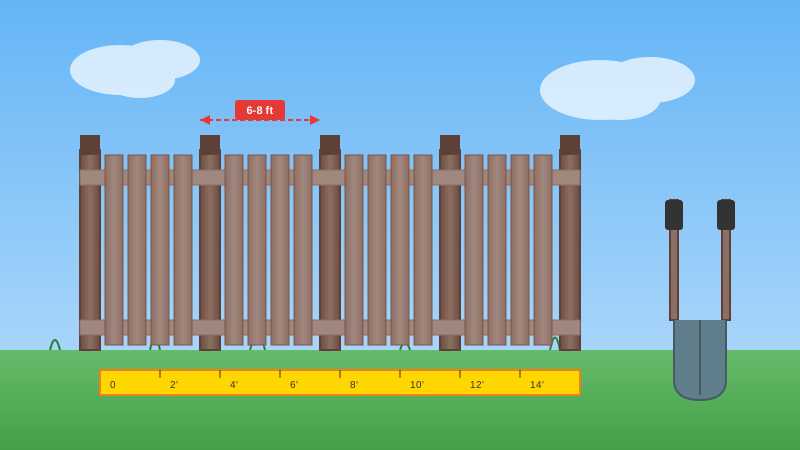
A DIY fence saves thousands in labor. It adds privacy, security, and curb appeal. Success depends on proper post spacing and the right materials. This guide shows you how to build a fence that lasts decades.
2025 Fence Material Costs
Lumber prices have stabilized since 2022 but remain above pre-pandemic levels. Here’s what to expect.
Cost Comparison by Material
| Fence Type | Cost per Linear Foot (Installed) | DIY Material Cost | Lifespan |
|---|---|---|---|
| Chain Link (4-6 ft) | $12-25 | $6-12/ft | 15-30 years |
| Wood Privacy (6 ft) | $31-54 | $15-25/ft | 15-40 years |
| Vinyl Privacy (6 ft) | $25-40 | $18-35/ft | 20-30 years |
| Aluminum Ornamental | $30-50 | $20-35/ft | 30+ years |
Wood Fence Costs (2025)
Wood remains the most popular choice for privacy fencing:
| Wood Type | Material Cost per Foot | Characteristics |
|---|---|---|
| Pressure-Treated Pine | $12-18 | Most economical, requires staining |
| Cedar | $18-25 | Natural rot resistance, beautiful grain |
| Redwood | $25-40 | Premium appearance, excellent durability |
| Composite | $25-45 | Low maintenance, manufactured wood-plastic blend |
Chain Link Costs by Gauge
Chain link wire thickness (gauge) significantly affects price and durability:
| Wire Gauge | Cost per Sq Ft | Best For |
|---|---|---|
| 11.5 gauge | $1.50-7 | Light residential, temporary |
| 9 gauge | $2-10 | Standard residential (most common) |
| 6 gauge | $4-20 | Commercial, high security |
Vinyl Coating: Add 50-100% to base chain link costs for vinyl-coated options, which last 20-30 years vs. 15 years for standard galvanized.
Understanding Post Spacing
Post spacing makes or breaks your fence. Wrong spacing causes sagging and leaning.
The Golden Rule: 6-8 Feet
Most fences need posts every 6-8 feet. This balances strength and material cost.
Spacing by Fence Type
| Fence Type | Recommended Spacing | Notes |
|---|---|---|
| Wood Privacy | 6-8 feet | 8 ft matches standard lumber lengths |
| Wood Picket | 6-8 feet | Can go closer for heavier pickets |
| Chain Link | 8-10 feet | Stronger material allows wider spacing |
| Vinyl | 6-8 feet | Follow manufacturer specifications |
| Split Rail | 8-10 feet | Decorative, less structural |
| Wire/Farm | Up to 25 feet | For boundary marking only |
Why Spacing Matters
- Too Wide (over 10 ft): Rails sag, panels flex in wind, premature failure
- Too Narrow (under 4 ft): Wastes materials, looks cluttered, no structural benefit
- Just Right (6-8 ft): Optimal strength-to-cost ratio, professional appearance
Pro Tip: Plan your spacing to minimize cutting. If your fence line is 56 feet, use 8-foot spacing (7 sections) rather than 7-foot spacing (8 sections with waste).
Post Depth: The Foundation of a Strong Fence
A fence is only as strong as its posts. The depth at which you set them determines whether your fence stands for 5 years or 50.
The One-Third Rule
The industry-standard guideline: bury one-third of the total post length underground.
| Fence Height | Minimum Post Depth | Post Length Needed |
|---|---|---|
| 4 feet | 20 inches | 6 feet |
| 5 feet | 24 inches | 7 feet |
| 6 feet | 28-32 inches | 8-9 feet |
| 8 feet | 32-36 inches | 10-11 feet |
Frost Line Considerations
If you live in a cold climate, the one-third rule may not be enough. Posts must extend below the frost line to prevent frost heave—the ground expanding during freeze-thaw cycles and pushing posts upward.
| Region | Typical Frost Depth | Minimum Post Depth |
|---|---|---|
| Southern US | 0-12 inches | Standard (1/3 rule) |
| Mid-Atlantic | 24-36 inches | 30-40 inches |
| Northern US | 36-48 inches | 42-54 inches |
| Canada/Alaska | 48-72 inches | 54-78 inches |
Critical: Check your local building codes for exact frost line requirements. Setting posts above the frost line guarantees premature failure.
Hole Diameter
Dig holes 3 times the width of your post:
- 4×4 posts (3.5” actual): 10.5” diameter hole
- 6×6 posts (5.5” actual): 16.5” diameter hole
- Round posts (2.5” diameter): 7.5” diameter hole
Step-by-Step Installation Guide
Before You Begin: Critical Preparation
1. Call Before You Dig
This is non-negotiable. Contact your local utility locating service (811 in the US) at least 48 hours before digging. Underground utilities—gas, electric, water, fiber—can be deadly if struck.
2. Check Property Lines and Permits
- Verify exact property boundaries with a survey or property markers
- Research local setback requirements (how far from property line)
- Obtain necessary permits—most jurisdictions require them for fences over 4 feet
3. Plan Gate Locations
Gates need extra support. Plan for:
- Double posts at gate openings
- Level ground or adjustable hinges
- Minimum 36” width for pedestrian gates, 10-12 feet for vehicles
Phase 1: Layout and Marking
Tools Needed:
- Measuring tape (100 ft recommended)
- Wooden stakes
- Mason’s line or string
- Spray paint
- Hammer or mallet
Steps:
- Drive stakes at each corner and end point of your fence line
- Run string tightly between stakes—this is your fence line
- Measure and mark post positions along the string
- Use spray paint to mark the ground at each post location
- Double-check measurements before digging
Pro Tip: Run string 2” outside your actual fence line. This allows you to keep the string in place while digging without interference.
Phase 2: Digging Post Holes
Tools Needed:
- Post hole digger (manual) or power auger
- Digging bar for rocky soil
- Shovel
- Tape measure
- Level
Steps:
- Start at a corner or end post
- Dig each hole to required depth + 6” (for drainage gravel)
- Keep sides relatively straight—bell-shaped holes allow post movement
- Make the bottom slightly wider than the top for stability
- Check depth frequently—don’t over-dig
Soil Considerations:
| Soil Type | Adjustment |
|---|---|
| Sandy | Dig 15× post diameter deep, add extra gravel |
| Clay | Add 6” gravel at bottom, may need French drain |
| Rocky | Use digging bar, consider driven posts |
| Loamy | Standard depth, ideal conditions |
Phase 3: Setting Posts
Materials Needed:
- 3/4” crushed gravel
- Concrete mix (optional but recommended)
- Water
- Braces (1×4 lumber works well)
- Level
- Clamps or screws for bracing
Method A: Concrete Set (Recommended for most applications)
- Add 6” of gravel to hole bottom, compact firmly
- Place post in center of hole
- Brace post on two perpendicular sides
- Check plumb (vertical) with level on two adjacent faces
- Mix concrete to thick oatmeal consistency
- Pour around post, filling to 2” below ground level
- Slope concrete away from post for water drainage
- Let cure 24-48 hours before attaching rails
Method B: Gravel/Tamped Earth (For removable or lightweight fences)
- Add 6” gravel to hole, compact
- Set post, brace, and level
- Backfill with alternating layers of gravel and soil
- Tamp every 4-6 inches firmly
- Mound soil slightly around post base for drainage
Phase 4: Installing Rails and Panels
Once all posts are set and cured (48+ hours for concrete):
For Wood Fences:
- Mark rail positions on posts (typically 8” from top and bottom, one center)
- Install top rail first using brackets or toe-nail method
- Install bottom rail
- Attach pickets or panels with galvanized screws or nails
For Chain Link:
- Attach tension bands and brace bands to terminal posts
- Install top rail through loop caps
- Unroll fabric and attach to terminal post with tension bar
- Stretch fabric using fence stretcher or come-along
- Attach fabric to top rail with ties every 24”
For Vinyl:
- Follow manufacturer’s specific instructions—they vary
- Most use a bracket system that locks panels to posts
- Allow for expansion/contraction in hot climates
Common Mistakes to Avoid
1. Not Checking for Utilities
Hitting a gas line can cause explosions. Hitting a fiber optic cable can result in $10,000+ repair bills. Always call 811.
2. Setting Posts Too Shallow
The #1 cause of fence failure. When in doubt, go deeper.
3. Not Allowing for Slope
On sloped ground, you have two options:
- Stepped: Posts stay vertical, panels step down (looks formal)
- Racked: Panels follow slope (looks natural but limits panel height)
4. Forgetting About Gates
Gates need:
- Posts set 50% deeper than fence posts
- Strong hinges rated for gate weight
- Proper clearance at bottom (2-3” for grass growth)
- Latch mechanism that aligns even as wood moves
5. Using Wrong Fasteners
Always use:
- Galvanized or stainless steel hardware
- Screws rated for ground contact (for treated lumber)
- Correct size—too small fails, too large splits wood
Calculate Your Materials
Ready to start your project? Our Fencing Calculator helps you determine:
- Total linear feet of fencing
- Number of posts needed
- Rails, pickets, and panels required
- Gate hardware quantities
- Concrete and gravel volumes
For post setting with concrete, try our Concrete Calculator to get the exact bags needed.
Related Resources
- Fence Post Depth Calculator - Depth rules and examples
- How to Set Fence Posts - Step-by-step post setting guide
- Fencing Calculator - Posts, rails, pickets, concrete, and cost
When to Hire a Pro
Consider professional installation for:
- Fences over 6 feet tall
- Rocky or heavily sloped terrain
- Retaining walls combined with fencing
- Commercial/security applications
- Time constraints (pros install much faster)
Cost Comparison: DIY saves 40-60% on labor, but adds significant time. A 200-foot fence might take a homeowner 3-4 weekends vs. 2-3 days for a professional crew.
Bottom Line: A well-installed fence adds value, privacy, and beauty to your property. Success comes from proper planning—correct post spacing, adequate depth, and quality materials. Take the time to do it right, and your fence will serve you for decades.
References
- Call 811 (utility locate before digging): https://call811.com/
- ICC International Residential Code (IRC) (frost depth / foundations): https://codes.iccsafe.org/
- OSHA (excavation and trenching safety): https://www.osha.gov/trenching-excavation
Content Verification
- • Technical formulas cross-referenced with industry standards
- • Pricing data sourced from 2025 industry reports