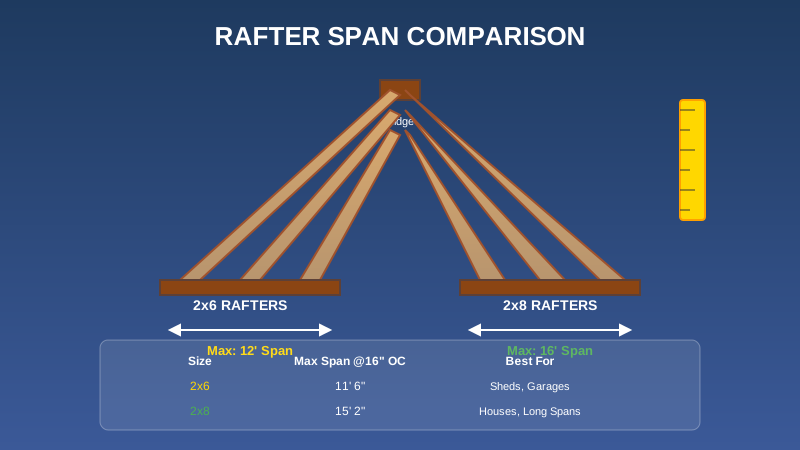
Many people search for a rafter span table expecting one clean answer. In real projects, the answer changes as soon as you change the span, pitch, spacing, snow load, or roof material.
That is why good framing plans do not start with “What size rafter should I use?” They start with:
- how far the rafter must actually span,
- how steep the roof is,
- how far apart the rafters are,
- and what loads the roof must carry.
The Rafter Calculator handles the geometry quickly. This guide explains the planning logic behind the numbers so you know what changes the result.
The Four Inputs That Matter Most
1. Span
For a common gable roof, the rafter does not use the full building width as the run. It uses half the span.
If a building is 24 feet wide:
- full building span = 24 ft
- common rafter run = 12 ft
That one detail is the source of many DIY framing errors.
2. Pitch
Pitch changes both the rafter length and the cut angles.
A 6/12 roof rises 6 inches for every 12 inches of horizontal run. A steeper roof produces:
- a longer rafter,
- a steeper plumb cut,
- and more total roofing area.
If you need help reading those numbers first, review Understanding Roof Pitch.
3. Spacing
The distance between rafters changes the load each member must carry.
Common starting points are:
- 16 inches on center for many residential roofs
- 24 inches on center for lighter roof systems or engineered layouts
Wider spacing can save lumber, but it usually increases the demand on each rafter and on the sheathing above it.
4. Loads and species
The same 2x10 does not behave the same way everywhere. Final sizing depends on:
- snow load,
- roofing dead load,
- species and grade,
- local code tables,
- and whether the framing system uses ceiling ties, collar ties, or a structural ridge.
That is why published span tables vary. Use this guide for planning, then confirm the exact member size against local code or engineering.
A Fast Example: 24-Foot Building at 6/12 Pitch
Here is the geometry for a common gable roof:
- Building width: 24 ft
- Run: 12 ft
- Rise at 6/12 pitch: 6 ft
The length of the common rafter before overhang is:
Rafter length = √(run² + rise²)
Rafter length = √(12² + 6²)
Rafter length = √180
Rafter length ≈ 13.4 ft
That number still does not include every field adjustment. You may also need to account for:
- overhang,
- ridge board or ridge beam details,
- birdsmouth layout,
- and any seat-cut limitations on the wall plate.
This is exactly the kind of math the Rafter Calculator can speed up before you move into cut lists.
Rough Planning Direction for Common Rafter Sizes
There is no universal span chart that fits every region, but these planning directions are useful:
| Framing Situation | Common Planning Direction |
|---|---|
| Small shed, porch roof, short run | 2x6 or 2x8 often enters the conversation |
| Mid-size residential run | 2x8 or 2x10 is a common next step |
| Longer spans or heavier snow | 2x10, 2x12, or engineered members become more likely |
| Open ceilings / structural ridge conditions | Engineered design is often needed sooner |
Treat that table as a conversation starter, not a permit-ready answer. Span tables are sensitive to local load assumptions.
Why Pitch Changes More Than People Expect
Two roofs with the same building width do not create the same framing demand if the pitch changes.
For the same 24-foot-wide building:
- a low-slope roof creates a shorter common rafter,
- a steep roof creates a longer common rafter,
- and the steeper roof usually increases total roofing area.
That affects:
- lumber takeoff,
- sheathing quantity,
- shingle count,
- ladder and staging complexity,
- and labor time.
If you are estimating the roof package after the framing math, continue with How to Calculate Roofing Materials.
Common DIY Mistakes When Sizing Rafters
Using the full span instead of half the run
This is the biggest geometry error on simple gable roofs. The common rafter run is usually half the building span.
Ignoring the overhang
Rafter length for framing layout and board length for ordering are not always the same number. Overhang can push you into a longer stock length.
Assuming pitch only affects appearance
Pitch changes the rafter length, the cut angles, and the total roof area above the walls.
Copying a neighbor’s lumber size
Two homes with similar footprints can still require different framing because the snow load, roofing material, spacing, and lumber grade are different.
Treating code tables as optional
Roof framing is structural work. Local span tables and inspection requirements matter, especially once you move past a small shed or porch roof.
When a Simple Rule of Thumb Stops Working
The project deserves more than rules of thumb when you are dealing with:
- long clear spans,
- heavy tile or slate roofs,
- cathedral ceilings,
- high snow regions,
- unusual species or reclaimed lumber,
- or a structural ridge beam instead of a simple ridge board.
Those situations are exactly where the framing geometry, material takeoff, and structural design start to diverge from “normal” residential assumptions.
A Better Workflow for Planning Roof Framing
Use this order:
- Measure the roof footprint with How to Measure Your Roof.
- Confirm the roof pitch.
- Use the Rafter Calculator to get length, rise, angle, and rough counts.
- Compare the concept against local span tables or engineering.
- Use the Roofing Calculator and a full material takeoff for sheathing, shingles, underlayment, and accessories.
That sequence keeps the geometry, structural check, and materials estimate aligned.
Final Takeaway
Rafter sizing is never just about one board dimension. The real answer always depends on span, pitch, spacing, and load working together.
Use rules of thumb to narrow the options. Use the calculator to handle the roof math. Then confirm the final member size with the code tables or structural requirements that apply to your project.
Editorial Review & Methodology
- • Technical formulas cross-referenced with industry standards
- • Verified against: NRCA guidance and standard roofing estimating practices, OSHA roof-safety references where work-at-height guidance matters, Current U.S. roofing material pricing benchmarks
- • Pricing data sourced from 2025 industry reports
- • This roofing content is scoped for U.S. planning and estimating workflows, not for stamped engineering or permit approval.
- • We review formulas, material assumptions, and practical steps against category-appropriate references before publishing updates.
- • We refresh pages when calculator logic, supplier assumptions, or pricing guidance materially changes.
- • Readers should confirm final dimensions, structural requirements, and local code obligations with qualified local professionals.