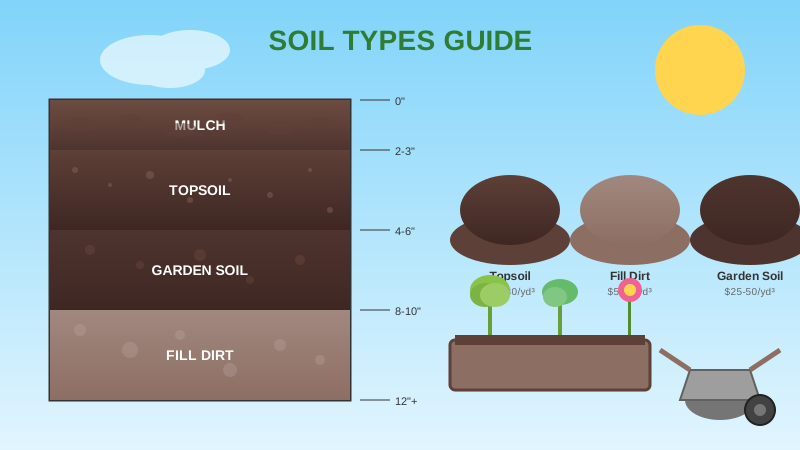
Walk into any landscape supply yard and you’ll see piles of material with similar names: topsoil, fill dirt, garden soil, planting mix. They all look like dirt—so what’s the difference? Choosing the wrong type can lead to poor plant growth, drainage problems, or structural failures. This guide explains exactly what each type is, when to use it, and how much it costs in 2025.
The Four Main Types of Landscaping Dirt
Let’s start with clear definitions of each material:
1. Topsoil
What it is: The uppermost 2-8 inches of natural soil, rich in organic matter, microorganisms, and nutrients.
Composition:
- Sand, silt, and clay in varying proportions
- 2-10% organic matter (decomposed plant material)
- Active microbial life
- Natural seed bank (may contain weed seeds)
Key Properties:
- Supports plant growth
- Good moisture retention
- Contains nutrients
- Dark color (from organic content)
Best Uses:
- Establishing new lawns
- Filling low spots in existing lawns
- Creating garden beds
- Grading around foundations
- Topdressing for lawn improvement
2. Fill Dirt
What it is: Subsoil excavated from below the topsoil layer, containing little to no organic matter.
Composition:
- Primarily clay, sand, and rock
- Minimal organic content
- No active microbial life
- Compact and dense
Key Properties:
- Highly stable (doesn’t decompose or settle)
- Compacts well
- Poor for plant growth
- Doesn’t shift over time
Best Uses:
- Filling holes and depressions
- Building up elevation
- Base for concrete, pavers, or driveways
- Backfilling around foundations
- Creating berms (when topped with topsoil)
3. Garden Soil
What it is: A manufactured blend designed specifically for planting, combining topsoil with organic amendments.
Composition:
- Screened topsoil base
- Compost (25-50%)
- Peat moss or coconite
- Sometimes added fertilizers
- pH-adjusted for optimal plant growth
Key Properties:
- Nutrient-rich
- Excellent drainage
- Lightweight and workable
- Premium quality (and price)
Best Uses:
- Vegetable gardens
- Flower beds
- Mixing with native soil
- Container gardening (when combined with perlite)
- Amending poor native soil
4. Mulch
What it is: Organic or inorganic material used to cover soil surface—not a planting medium.
Types:
- Organic: Wood chips, bark, straw, leaves
- Inorganic: Rubber, gravel, landscape fabric
Key Properties:
- Suppresses weeds
- Retains soil moisture
- Regulates soil temperature
- Decomposes and improves soil (organic types)
Best Uses:
- Around trees and shrubs
- Garden bed surfaces
- Playground areas
- Pathway cover
- Erosion control
Comparison Chart: Quick Reference
| Property | Topsoil | Fill Dirt | Garden Soil | Mulch |
|---|---|---|---|---|
| Organic Matter | Medium (2-10%) | Minimal (0-2%) | High (25-50%) | 100% (organic types) |
| Nutrient Content | Moderate | Poor | High | N/A (surface use) |
| Plant Support | Good | Poor | Excellent | N/A |
| Structural Stability | Low | High | Very Low | N/A |
| Drainage | Variable | Poor | Good | Excellent |
| Compaction | Moderate | High | Low | Does not compact |
| Cost | $$ | $ | $$$ | $$ |
2025 Pricing Guide
Understanding current market prices helps you budget accurately and recognize fair quotes.
Bulk Pricing (Per Cubic Yard)
| Material | Price Range | Average | Notes |
|---|---|---|---|
| Fill Dirt | $5-25 | $12 | Cheapest option; sometimes free |
| Unscreened Topsoil | $10-20 | $15 | May contain debris |
| Screened Topsoil | $17-30 | $22 | Sifted, uniform texture |
| Premium Loam | $30-55 | $40 | Lab-tested, optimal blend |
| Garden Soil | $25-50 | $35 | Pre-mixed with compost |
| Compost | $20-45 | $30 | 100% organic matter |
| Mulch (wood) | $20-45 | $30 | Varies by wood type |
| Mulch (colored) | $35-65 | $45 | Dyed for aesthetics |
Bagged Pricing
For small projects, bagged soil from home improvement stores:
| Product | Bag Size | Price Range | Coverage |
|---|---|---|---|
| Topsoil | 40 lb (0.75 cu ft) | $3-6 | ~6 sq ft at 1” depth |
| Garden Soil | 1-2 cu ft | $5-15 | 12-24 sq ft at 1” depth |
| Potting Mix | 1-2 cu ft | $8-20 | Container use |
| Mulch | 2 cu ft | $3-8 | 8 sq ft at 3” depth |
Delivery Costs
| Load Size | Delivery Fee | Total with Material |
|---|---|---|
| 1-5 cu yards | $50-100 | $100-300 |
| 6-10 cu yards | $75-150 | $200-500 |
| 10-15 cu yards (full load) | $100-200 | $300-800 |
Money-Saving Tip: Many suppliers offer free delivery over 10 cubic yards. Order with neighbors to share a truckload.
How Much Do You Need?
Formula
Cubic Yards = (Length × Width × Depth) ÷ 27
All measurements in feet. Depth commonly expressed in inches, so convert:
- 1” depth = 0.083 feet
- 2” depth = 0.167 feet
- 3” depth = 0.25 feet
- 4” depth = 0.333 feet
Coverage Estimates
| Application | Recommended Depth | Cu Yards per 1,000 sq ft |
|---|---|---|
| Topdressing lawn | 0.25-0.5” | 0.8-1.5 |
| New lawn establishment | 2-4” | 6-12 |
| Garden bed preparation | 4-6” | 12-18 |
| Filling low spots | Variable | Calculate individually |
| Mulch around plants | 2-4” | 6-12 |
Quick Coverage Table
| Cubic Yards | Coverage at 2” | Coverage at 4” | Coverage at 6” |
|---|---|---|---|
| 1 | 162 sq ft | 81 sq ft | 54 sq ft |
| 3 | 486 sq ft | 243 sq ft | 162 sq ft |
| 5 | 810 sq ft | 405 sq ft | 270 sq ft |
| 10 | 1,620 sq ft | 810 sq ft | 540 sq ft |
Choosing the Right Material for Your Project
Project: New Lawn Installation
Material Needed: Screened topsoil Depth: 4-6” over compacted subgrade Why: Grass needs nutrients and organic matter to establish roots
Alternative: If budget is tight, use 3” fill dirt as base + 3” topsoil on top
Project: Vegetable Garden
Material Needed: Garden soil or amended topsoil Depth: 6-12” for most vegetables Why: Vegetables are heavy feeders requiring nutrient-rich soil
Recipe for DIY Garden Soil:
- 60% screened topsoil
- 30% compost
- 10% perlite or coarse sand
Project: Raised Garden Beds
Material Needed: Raised bed soil mix Depth: Full bed height (typically 8-12”) Why: Raised beds need excellent drainage and high fertility
Recipe for Raised Bed Mix:
- 50% screened topsoil
- 30% compost
- 20% perlite or vermiculite
Project: Filling Holes/Low Spots
Material Needed: Fill dirt (for depth) + topsoil (top layer) Method: Fill within 4” of final grade with fill dirt, cap with topsoil Why: Fill dirt won’t settle; topsoil supports grass regrowth
Project: Driveway or Patio Base
Material Needed: Clean fill dirt or crushed stone Depth: 4-8” compacted base Why: Stable base prevents settling; organic matter would decompose
Project: Foundation Backfill
Material Needed: Clean fill dirt Depth: As needed to meet grade Why: Prevents settlement against foundation; won’t retain moisture
Critical: Never use topsoil or garden soil against foundations—organic matter retains water and attracts pests.
Understanding Soil Quality
What Makes “Good” Topsoil?
Quality topsoil should have:
- Proper Texture – Crumbly, not sticky or dustite
- Dark Color – Indicates organic content
- Earthy Smell – Should smell like forest floor, not sour or chemical
- No Debris – Free of large rocks, roots, trash
- Appropriate pH – 6.0-7.0 for most plants
Red Flags When Buying Soil
Watch out for:
- Very cheap topsoil – Often just screened fill dirt
- Strong odor – May indicate contamination
- Clumpy texture – High clay content
- Visible debris – Poorly screened
- Unknown origin – May contain herbicides or contaminants
Testing Your Soil
For important projects, get soil tested:
- DIY Test Kits: $15-30, tests pH and basic nutrients
- Extension Service: $15-50, comprehensive analysis
- Private Lab: $50-150, detailed professional report
Layering Strategy: Best of All Worlds
For optimal results, many projects benefit from layered approaches:
Example: New Planting Bed
Layer 3 (Top): 2-3" mulch (moisture retention, weed suppression)
Layer 2 (Middle): 4-6" garden soil (nutrients, drainage)
Layer 1 (Base): 2-4" fill dirt if needed for elevation
Native Soil: Loosened 4-6" deep (integration layer)
Example: Lawn Renovation
Layer 2 (Top): 2-4" screened topsoil (seed bed)
Layer 1 (Base): Fill dirt as needed for grade corrections
Native Soil: Existing lawn or compacted subgrade
Common Mistakes to Avoid
Mistake 1: Using Fill Dirt for Planting
Problem: Plants can’t establish in nutrient-poor subsoil Solution: Always top fill dirt with 4-6” of topsoil for planting
Mistake 2: Using Garden Soil for Filling
Problem: Rich soil settles as organic matter decomposes, creating sinkholes Solution: Use fill dirt for volume, topsoil only for top layer
Mistake 3: Not Accounting for Settlement
Problem: Fresh soil compacts 10-20% over time Solution: Over-fill slightly and water deeply to encourage settling before planting
Mistake 4: Ignoring Drainage
Problem: Heavy clay soil or poor grading causes waterlogging Solution: Amend soil with sand/perlite; ensure positive drainage away from structures
Mistake 5: Buying Without Inspection
Problem: “Topsoil” may be mislabeled fill dirt Solution: Visit the supplier, inspect the pile, and ask about source
Seasonal Considerations
Best Time to Buy
- Spring: Highest demand, highest prices
- Summer: Good availability, moderate prices
- Fall: Best prices, excellent for soil preparation
- Winter: Limited availability in cold climates, best deals where available
Seasonal Projects
| Season | Best Project |
|---|---|
| Early Spring | Lawn renovation, bed prep |
| Late Spring | New plantings with fresh soil |
| Summer | Mulching to retain moisture |
| Fall | Soil amendment, lawn overseeding |
| Winter | Planning and bulk purchasing |
Calculate Your Needs
Don’t guess on quantities—use our Dirt Calculator to determine exactly how much material you need. It handles:
- Multiple area shapes
- Various depth requirements
- Conversion between cubic yards and bags
- Cost estimates based on material type
For projects involving concrete or masonry, check our Concrete Calculator.
Bottom Line: The right dirt makes all the difference in landscaping success. Use fill dirt for structural needs, topsoil for planting areas, garden soil for high-demand plants, and mulch to protect and beautify. Match the material to the job, and your landscape will thrive for years to come.
References
- USDA NRCS (soil basics and soil quality): https://www.nrcs.usda.gov/
- USDA Web Soil Survey (local soil information): https://websoilsurvey.nrcs.usda.gov/
Content Verification
- • Technical formulas cross-referenced with industry standards
- • Pricing data sourced from 2025 industry reports